

机器视觉智能系统套件
视觉安防监控
锐益视觉安防监控运行在你已有的摄像头与录像机上。它按你设定的关注点巡查厂区、作业区与出入口,把每一次发现转成一条事件——一段录像、一个位置、一个时间戳和一位负责人。它报告的是「看起来发生了什么」,不是结论:由人确认、由人处置,过程记录长期可查。
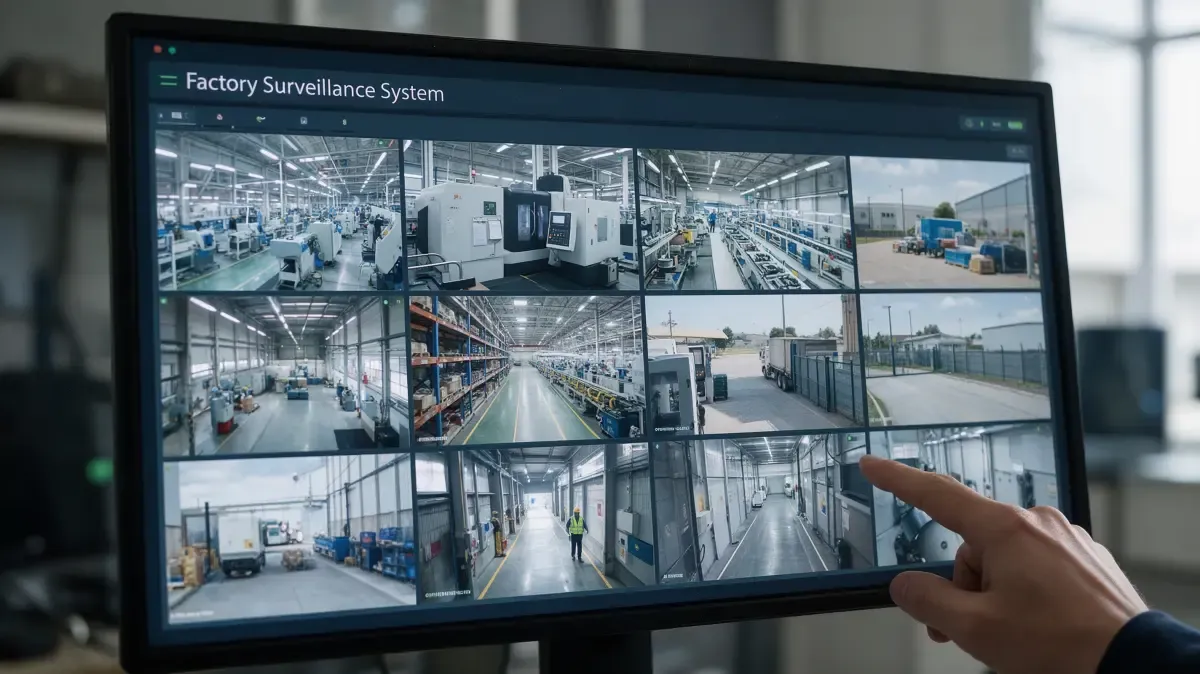
大多数现场早已装了摄像头,缺的是处理摄像头所拍内容的方法。画面总是等到出了事之后才被查看,几小时后由一个不在场的人翻查。
视觉安防监控改变摄像头的用途。它运行在你已有的视频之上,对你指定的情形做出反应,并把每一起作为单个事件派给具体的人——附一段短视频、一个位置和一个时间戳。
它不决定处置结果。它报告疑似正在发生的情况;由人来确认、由人来处置,发生过的记录始终可查。
发现问题不是终点,把问题闭环才是。
它是什么
An application layer on what you already have. It runs over existing cameras, recorders and video systems rather than asking you to replace them.
A configured set of things to watch for. Rules are set per area, per shift and per risk — not one generic model applied across the whole site.
Events, not an alert stream. Repeated detections of the same situation are merged, so one incident produces one record rather than twenty.
What a responder needs, attached. Each event carries a short clip, a key frame, the camera and area, and a timestamp.
A route to a named person. Events go to the person or role responsible for that area, with an expectation to acknowledge and to close.
Vision underneath is handled elsewhere. 模型和算法由锐益 Visual CAST 平台提供和管理;本应用关注如何用好它们。
当下的阻碍是什么
Coverage. 相机负责记录,不会主动盯守。
大多数画面在大多数时间无人观看。缺口可以预知:夜间、周末、交接班时段。事后回查意味着翻看数小时录像。而且常常是那些根本没对着事发点的相机。扩大覆盖意味着增人或增相机。而每台新相机又多一路没人看的画面。
Alerting. 告警会到来,决策不会。
移动侦测与规则触发被天气、阴影、动物和过路车辆频繁触发。误报够多,整套系统就被静音。一条「某相机发生事件」的通知仍要派人去看。判断并没有真正完成。没有指定接收人的告警,人人都以为别人处理了。事件就是这样丢失的。
闭环。没有任何机制强制收尾。
没有时钟。事情被发现、被提起,然后被淹没在一天的日常里。纠正措施口头约定。约定各方各自的记忆还不一样。到了复盘时无可复盘。没有计数、没有趋势,没有发现过什么、处理过什么的记录。
割裂。同一起事件散落在三处。
摄像头、门禁、消防与安全上报各存各的记录。牵涉其中三者的一个事件,散落在三个地方。视频在一个系统,安全记录在另一个。关联起来全靠手工。增减或更换摄像头往往被供应商锁定。覆盖决策变成了采购决策。
它监控什么
监测什么是配置出来的,不是一成不变的。大多数现场从三组规则起步,再把每组收窄到真正起作用的区域。
每条规则只对它适用的区域生效。在装卸月台重要的规则,在办公走廊可能毫无意义;到处全开正是告警量失控的原因。
软件报告的是一种表象,不是结论。它说的是:防护装备似乎缺失、似乎有人进入了某区域、似乎出现烟雾。由人确认并决定后续处置。系统不识别个人身份,也不读取车牌——它只处理在场、位置、运动与状态。对报告结果做何处置,始终由现场管理者决定。
您将获得
应用场景
同一套应用,不同的配置。各设置之间的差异在于:有哪些区域、适用哪些规则、谁接收什么。
场景 | 监控通常聚焦 |
厂区与生产区域 | 机台防护区、限制区域、防护用品、液体泄漏与通道堵塞 |
仓库与物流场站 | 装卸口、车辆移动、人车分离、非工作时段周界 |
建筑工地 | 现场出入、高处作业、防护用品、材料与设备失管 |
园区、大门与停车场 | 周界、尾随进入、占位车辆、无人值守出入口 |
零售与餐饮门店 | 后场、垃圾与收货点、闭店检查、非营业时段进入 |
核心能力
按功能分组。涉及模型、算法与接口的底层能力,均由底层的锐益 Visual CAST 平台处理。
Capability | What it means |
Camera and stream onboarding | 通过标准协议接入现有 IP 相机、录像机和视频系统;增换相机无需重建配置。 |
部署方式选择 | Run analysis at the edge, on your own servers, or in a hosted environment — the choice is usually driven by where video may be processed and stored. |
Areas, zones and schedules | Define areas, assign the rules that apply to each, and arm or disarm by shift, day and calendar. |
Camera health | Notice when a stream is lost, obscured, or has been moved, instead of discovering it during an incident review. |
Site security | 在不应出现的时间或地点出现人员和移动;疑似遗留或丢失的物体。 |
Worker safety | 疑似缺失防护装备;进入受限区域;作业姿态不安全;疑似跌倒或静止不动的人员。 |
Site conditions | Smoke or flame, leaks and spills, walkways and exits that appear blocked, fire equipment that appears obstructed. |
Configurable rules | Add, adjust and retire rules per area without redeploying the system. |
一起事件只报一次 | Repeat and near-repeat detections of the same situation are merged into a single record. |
Severity and routing | Grade events and route them to the person or role responsible for that area, on the channels they use. |
Suppression and quiet periods | Mute what is expected — planned work, maintenance, deliveries — so the queue stays readable. |
Escalation | If an event is not acknowledged it moves to the next person or role rather than staying open. |
Links to existing systems | Hand events to maintenance, safety or ticketing systems, and trigger on-site signals where those are installed. |
Clip and key frame | Every event keeps the seconds around it plus a still frame, so the decision can be made without visiting the site. |
Timeline search | Find footage by time, camera, area and event type instead of working through recordings. |
Retention rules | Set how long clips and records are kept, by area and by event type, in line with policy and local requirements. |
Audit trail | Who saw it, who acknowledged it, what was done, and when it was closed. |
Multi-site and multi-area | Separate sites, areas and tenants, each with its own configuration and its own event history. |
Role-based access | 规定谁能查看实时视频、谁能调取录像、谁能修改规则;查看与修改均留有日志。 |
Privacy controls | Mask or exclude areas that should not be analysed, and keep the scope of recording and analysis to what the site has approved. |
Trends and review packs | See where events concentrate and whether they recur, and produce what an operations or safety review needs without assembling it by hand. |
工作原理
Connect. Cameras, recorders and existing video systems are brought in, and areas are drawn and named.
Configure. 按区域选择适用的规则和时段;可设置静默期,并按班次布防。
Watch. Streams are analysed against those rules. What gets logged is an appearance, not a verdict.
Qualify. Repeated detections of the same situation are merged into one event, graded, and routed to a named owner.
Act. The owner confirms, dismisses or acts. Where relevant the event is handed to a maintenance or safety workflow, and on-site signals are triggered.
Record and review. The clip, the decision, the action and the closure are kept together — and that history is what the next review and the next tuning start from.
部署、集成与数据边界
Where it runs. Analysis can run at the edge, on your own servers, or in a hosted environment. The choice is usually driven by where video is allowed to be processed and stored.
What it hands off to. Events can go to maintenance, safety, access control or ticketing systems instead of living only in this application. Models and algorithms underneath are managed by the RUIYI Visual CAST platform.
What it starts from. Cameras, recorders and video management systems already installed are the starting point. Adding cameras does not require replacing what is there.
Who sees what. Who may view live video, who may retrieve footage, and how long clips are kept are configured per site, per area and per role, with access logged.
What is local. 录像范围、保存期限、告示标识、告知义务及各类通知要求,取决于所在司法辖区和现场。系统按这些要求配置;这些决策不由系统替你做出。