
机器视觉智能系统套件
锐益 Visual CAST 平台
锐益 Visual CAST 位于视觉模型(基础模型、检测模型、传统算法与自研模型)与业务系统之间。连接、适配、推理与追踪:一个 API、一层编排、一个地方管理全生命周期。
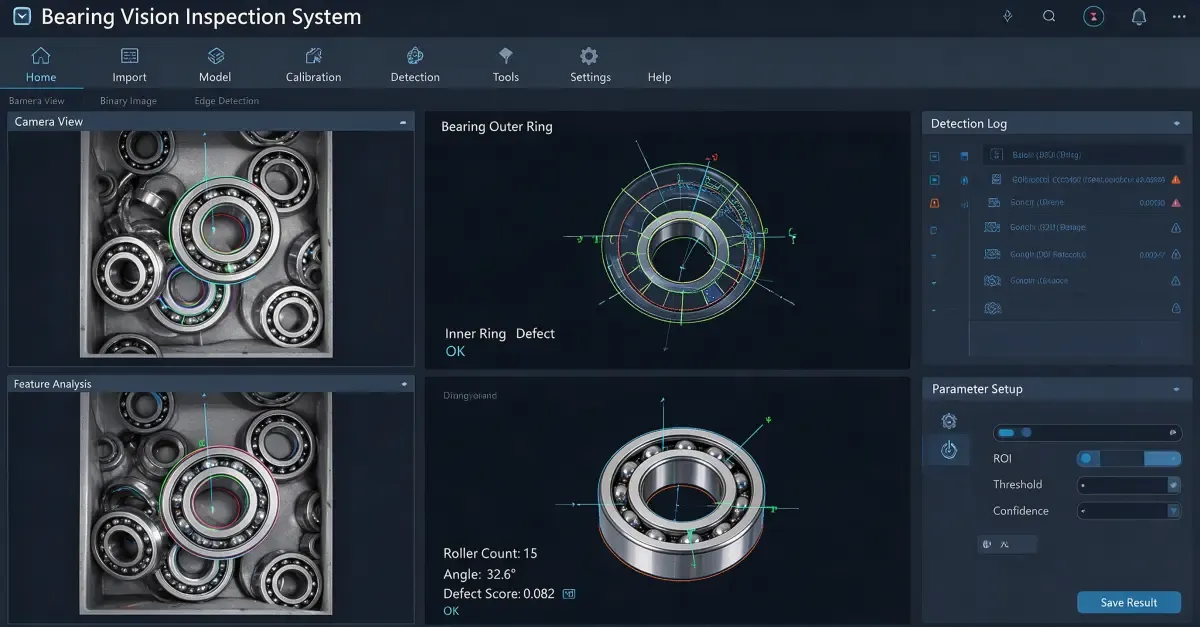
视觉模型已经非常强大。给它一张图片,它能说出里面有什么、哪里看起来不对、与上一张有何差异。对许多任务而言,这已经足够好了。
难点是另一半:把模型看到的内容送进能据此采取行动的系统。
产线相机捕捉到表面缺陷,模型给出判定。然后呢?这个判定要成为质量体系中的不合格记录,挂到具体工序和批次上;要决定该批次放行、返工还是冻结;要向班组长发出告警;还要留下日后可调取的证据。中间这一段正是多数视觉项目搁浅的地方:相机要单独写适配器,模型一换就要重写,边缘与云端要维护两套部署,结果停在演示界面,三个月后模型是否依然可靠也无人过问。
锐益 Visual CAST 平台补齐的正是这一段。它不构建模型,也不取代业务系统——它居于两者之间,把模型、设备、算力和结果组织成一个业务系统可可靠调用的能力层。上层系统只需集成一次,底层模型可以替换、增补和重新组合。
接入、适配、服务、跟踪。引入模型和设备,使其适配您的数据和您的语言,通过统一 API 输出结果,并跟踪版本、性能和成本——模型在变,上层集成不变。
它是什么
它是视觉能力与业务运营系统之间的平台层。向上,业务系统通过统一接口调用视觉能力;向下,它登记模型与算法、调度算力、编排推理。
CAST 四个字母就是它做的事:
C — Connect. Reaching down to models and algorithms: vision foundation models, purpose-built detection models, classic vision algorithms and OCR, and models the customer trained themselves — all onboarded the same way and managed in one place. Reaching sideways to devices and sources: IP cameras, industrial cameras, edge devices, recorded video and video platforms already in place.
A — Adapt. Translating difference into one language: camera protocols and stream formats from different vendors, model formats exported from different frameworks, and most importantly the translation from what a model outputs — something looks wrong here — into what a business system recognises: which station, which batch, which defect class, which non-conformity code, which action to trigger. It also covers describing a detection target in plain language and turning that into a working detector, rather than collecting and labelling a large sample set every single time.
S — Serve. 通过统一的 API 和 SDK 开放能力:支持单次调用、批量任务和实时流;多个模型串成一条流水线——先定位、再分类、后测量;算力按策略分配到云端、边缘和本地;结果按规则路由到该去的地方——质量系统、告警通道、看板,或客户自己的应用。
T — Track. Models have versions that can be rolled out gradually and rolled back. Performance is watched continuously, with drift and degradation flagged for review before they spread. Who called what, when, with which model version, using how much compute, and producing which judgement — all recorded and searchable. Retention, redaction and access to image data are governed by policy.
说白了:模型不是难点,把模型看到的内容送进能行动的系统才是。
当下的阻碍是什么
团队很少因为模型不准而失败,失败往往出在配套的管道工程和上线之后的运维上。
集成
Every model arrives with its own interface. A new scene or a new model supplier means integrating again: new authentication, new request shape, new response structure, new error codes.
The model becomes a lock-in. 业务系统一旦绑死某家供应商的接口,换模型就等于重建——于是旧方案一直留着,哪怕更好的已经出现。
Results never reach the systems that act. The model says there is a scratch in the image. What the business system needs is station 3, lot A2024-0713, defect class SCR-02, recommend hold. Nobody builds that mapping, so the result stays on a demo screen.
设备
相机与协议五花八门。IP 相机、工业相机、边缘设备与既有视频平台各有各的接入方式与码流格式。边缘与云是两套独立开发。低延迟计算必须在边缘运行,而集中管理又依赖云端,部署、更新与监控往往要写两遍。
运营
模型上线后无人看管。灯光变化、来料变化、镜头脏了——性能悄悄漂移,直到投诉或一批漏检迫使人们关注。版本是一团迷雾。哪个站点跑哪个版本、改了什么、出了问题能否回滚到上一版——通常没人说得清。算力靠猜分配。多个任务争抢同一批资源,没有优先级依据,没有扩容触发条件,也看不到成本属于哪个任务。
治理
图像数据具有合规分量。保存多久、谁可查看、人脸数据能否离开现场、跨境运营中数据位于何处——各地区要求不同,需要在平台层统一处理,而非在每个应用里重复发明。审计时拿不出依据。判断由模型做出还是经人工修正、基于哪个模型版本、原图是否还在——关键时候这些都无法提供。
面向谁
Manufacturers. Want vision without building an algorithm team to get it: quality, safety and equipment checks stay with the business units and their integration partners, while CAST delivers the capability into the systems those teams already use.
System integrators. Need vision inside a project without standing up inference serving and interfaces from scratch each time: CAST gives one onboarding path and one delivery shape that carries between projects.
Solution vendors and software companies. Need vision inside their own product and delivered to their customers: CAST acts as the capability layer beneath the product, so model choice and iteration never disturb the interface they ship.
锐益智能自有产品线。Visual Quality Inspection, Visual Security Monitoring and the vision checks inside the catering suite run on the same capability layer — sharing model registry, compute scheduling, lifecycle and governance instead of each building its own.
您将获得
核心能力
C —— 连接(Connect)
能力 | 作用 |
模型与算法注册 | 视觉基础模型、检测模型、经典视觉算法与 OCR,以及客户自训模型,在同一处注册、版本化并可检索 |
设备与源接入 | IP 相机、工业相机、边缘设备、录像与既有视频平台统一接入、统一管理 |
多模型并行 | 同一场景挂接多个模型,并行运行或按规则切换,用于对比、灰度发布与回退 |
A —— 适配(Adapt)
能力 | 作用 |
协议与格式转换 | 不同厂商的相机协议、码流格式与模型格式归一化,向上只暴露一种接口 |
自然语言定义检测目标 | 用文字描述的目标与场景即可成为可用的检测器,降低每个新场景对大规模标注样本的依赖 |
结果映射到业务对象 | 模型输出映射为业务系统认识的字段:工位、批次、缺陷类别、处置方式与触发的动作 |
环境适配 | 同一能力定义按时延与数据驻留要求部署到云端、本地或边缘运行时 |
S —— 服务(Serve)
Capability | What it does |
Unified API and SDK | One interface covering single calls, batch jobs and live streams, independent of the model underneath. |
Pipeline orchestration | Models and rules chained into a flow — locate, classify, measure, judge — configurable and reusable across scenes. |
Compute scheduling | Cloud, edge and on-premise resources allocated and scaled by policy, with job priority and quotas. |
Result routing and closed loop | 结果按规则发送到质量系统、告警通道、看板或客户自有应用,并触发后续处理。 |
Human review channel | Low-confidence results routed to a review queue, with human decisions fed back and recorded. |
T —— 追踪(Track)
Capability | What it does |
Version and release management | Model versions, gradual rollout and rollback, with per-site scope control. |
Performance monitoring and drift alerts | Behaviour tracked continuously, with drift and degradation identified and raised for review. |
Audit and traceability | Model version, input, judgement and operator recorded for every call and searchable afterwards. |
数据治理 | Retention period, redaction policy and access rights for images and results configured by organisation and region. |
Cost and usage analysis | Compute and call volume reported by model, job and site to support capacity and cost decisions. |
工作原理
Connect. Register models and algorithms — platform-provided, customer-owned or third-party — bring in cameras and data sources, and normalise protocols and formats.
Define the capability. Describe what to detect and how to judge it, in words or by configuration, and map the output into the fields and actions the business system already understands.
Compose the pipeline. Chain models and rules into a flow: capture, pre-process, infer, judge, route.
Choose where it runs. Cloud, on-premise or edge, with compute assigned by latency, bandwidth and data-residency requirements.
Integrate once. The business system calls the capability through the unified API. Later model changes stay invisible to it.
Run and review. 结果落入业务系统并触发后续流程;低置信度结果转人工复核,复核结论回传系统。
Track and iterate. 版本、表现和成本持续记录;效果退化即触发重训或更换,通过灰度发布上线,并支持回滚。
集成与部署
业务系统。MES、QMS、WMS、EHS 及客户自有应用,通过统一 API 与 webhook 连接。设备层。IP 相机、工业相机、边缘计算设备与既有视频管理系统。模型层。平台提供、客户自有与第三方模型,以统一格式接入。工业协议。与 PLC、SCADA 及车间现场自动化的连接按项目配置。
部署模式——云端、本地或混合——以及集成范围在项目界定阶段商定,通常先从一个场景或一条产线做起,再扩展到更多站点。