
其他系统与定制化套件
机器人控制系统
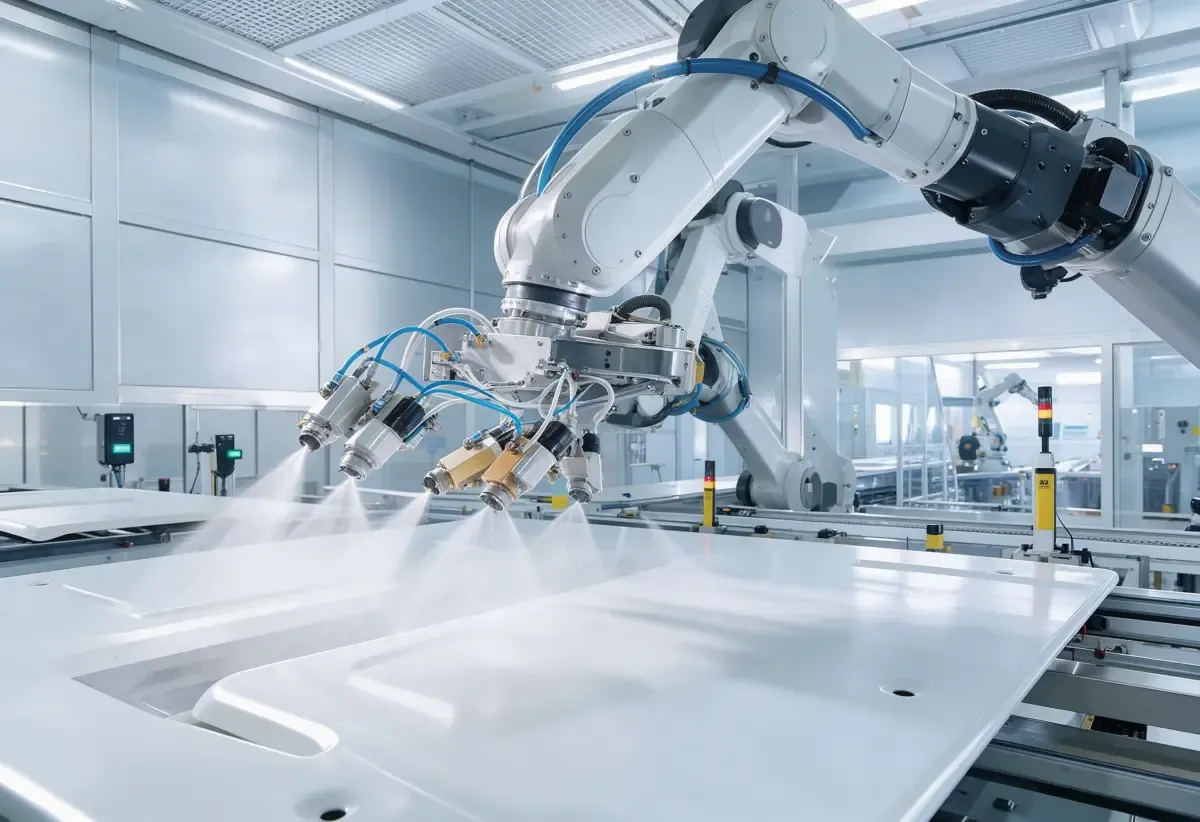
机器人作业的难点很少在机器人本身,而在等待:搬运臂在输送带上料时空转,机器夹着工件等下一工位,一个工位错过节拍导致整线停摆。协调,是把一组机器变成一个流程的关键。
机器人控制系统从一个地方协调工业机器人——机械臂、上下料与搬运设备、输送与转运机台——而不是一台机器一块屏幕。程序、动作以及机器之间的关系以版本化配置保存,即将运行的程序在发布前经过校验。
它刻意不去干预机器自身的安全。保护人员的联锁逻辑仍保留在机器自身的安全装置中,各归其位。本应用负责协调作业:运行什么、何时运行、按什么顺序运行,以及发生了什么。
机器并非不会协调。它们只是按照某个人当初随手搭好的顺序互相等待。
它是什么
One place for the cell. Every machine registered with what it is, what it can do and what it is connected to, instead of existing only inside its own programming.
Coordination between machines. What may run together, what must wait, and for how long — held as configuration rather than left to the timing in each program.
Sequences as versioned configuration. A change to how the cell runs is a controlled change with a record, not an edit made on a machine while production is running.
Checked before release. What is about to run is verified against the configuration — timings, interlocks between machines, conditions that must hold — before it is allowed to start.
What actually ran is retained. Which sequence ran, when, and what the machines reported, so a stoppage can be looked at afterwards.
Machines keep their own safety. 硬件安全装置、防护栏和紧急停止装置仍由机器及现场安全设计负责,本应用不替代它们。
当下的阻碍是什么
一台机器一块屏幕。没有人能看到整个单元,只看得到单台机器。
每台机器人各自编程、各自监控。协调只能靠各自程序里手敲的时序。改一台机器人就得跑到它跟前。所以改动总在没人盯着时发生,且未必留有记录。机器上看不出程序版本。没人说得清实际加载的是什么。
等待不可见。时间损耗在机器之间,而不是机器内部。
An arm stands idle and nobody can say whether it is waiting or broken. So the first response is to go and look.
A transfer machine waits for a part that arrives late, and the whole cell absorbs it. Which never appears as a number anywhere.
Cycle time is measured per machine. 这忽略了一个事实:单元的节拍由其中最慢的一次握手交互决定。
A stop stops everything. 一台设备的问题,会成为整个单元的问题。
一台机器人异常停机,其余全部停摆。因为时序没有定义好的暂停与恢复机制。重启意味着到机器旁手动干预。这需要熟悉那个特定单元的人。停机时正在做什么并不总是清楚。恢复得先弄清哪道工序做到一半。
现场的单元不是办公室里的单元。配置与现实渐行渐远。
设备更换后程序现场临时调整。配置从此不再描述实际运行的东西。调好的时序从不记录。一次维修就可能被重置而无人知晓。生产中做出的改动无处留痕。一个单元就是这样变得无法复现的。
多台机器人,一套时序
无论单元里有多少台机器,都是同样的四个要点。
现场配置的是协调本身:哪些机器可以同时运行,时序启动前必须满足什么条件,时序中一台机器停下后如何处理。每台机器在自身安全边界内的动作仍归它自己管。这个划分是有意为之:本应用是决定下一步运行什么的那一层,而不是决定人能否靠近机器的那一层。
您将获得
应用场景
不同设置之间的差异在于:有多少台机器相互联动,以及单元在整个生命周期内的变更幅度。
场景 | 机器人控制通常聚焦 |
加工与装配单元 | 机械臂、机床与传送的协调,以及彼此间的节拍 |
搬运与码垛 | 依来料到位情况而定的动作序列 |
安装与装配系统 | 多机须按定义顺序与条件协同动作 |
输送与流转线 | 输送线、缓存与下游设备之间的握手 |
频繁变更的单元 | 产品切换、设备更换与布局变更纳入配置管理 |
核心能力
按功能分组展示。
Capability | What it means |
Machine register | Each machine, what it can do, what it is connected to, and where it sits in the cell |
Sequence management | Work defined as a sequence of steps, with the conditions each step depends on |
Coordination rules | What may run together, what must wait, and for how long |
版本控制 | Sequences held under version, with what changed between releases recorded |
Pre-release checks | Timings, handshakes and required conditions verified before a sequence is allowed to run |
State monitoring | Where every machine is, what it is doing, and what it reported |
Stop and resume | Defined behaviour when a machine in the sequence stops, including what happens to work in progress |
Abnormal handling | Stops routed with the reason attached, and the in-process state recorded for recovery |
Cycle and wait analysis | Time inside machines and time between them, seen separately |
Product changeover | Sequence and parameter changes for a new product handled as configuration |
Maintenance support | What was running when a fault occurred, and what it reported at the time |
Simulation and dry run | Check a sequence before it is released to the floor |
Operator interface | A consistent interface across machines, rather than one per machine |
Integration | Connect to the line control layer, the machines themselves, and the systems that carry the work |
部署方式选择 | On the cell controller, a machine controller, or centrally, decided by latency and by availability requirements |
Roles and retention | Role-based access, retention set by policy, with releases and overrides logged |
工作原理
Register the machines. What each machine is, what it can do, and what it connects to.
Define the work. 将单元的作业表达为步骤序列,并明确每个步骤所依赖的条件。
Set the coordination. What may run together, what must wait, and how long a wait is acceptable before it is flagged.
Check and release. A sequence is verified against the configuration and then released, under version.
Run and watch. State, waits and stops are visible, and a stop carries the reason and the in-process state.
Change and release again. A change is a new version with a record, not an edit made on a running machine.
边界与它不决定的事
它负责协调,不负责机器安全。防护栏、紧急停止装置以及保护人员的安全功能,均保留在机器自身安全装置内,受现场安全设计约束。本应用不得纳入该安全链。
它不替代机器自身的控制。机器运动空间内的动作仍由机器自身掌控。
It does not prove a cycle time is achievable. It shows where time goes between machines, which is usually the part nobody was looking at.
Where it runs. On the cell controller, on a machine controller or centrally, decided by latency and by what happens to production if a connection is lost.
What is local. 机器安全、防护措施和作业规范由现场风险评估和当地法规决定,而非本应用。